Charades is a guessing game where one player acts out a word or title without speaking while their team tries to guess it. Here are the rules, hand signals and variations, plus how the phone version works.
Last updated:
What you need
At least 4 players for teams (2 or more for the phone version).
Words to act out: slips of paper in a bowl, a word list, or a generator.
A player from team A draws a word and has a few seconds to read it.
They signal the category (movie, book, TV show…) and act out the word without speaking.
Their team shouts guesses until someone gets it or the timer runs out (usually 1–2 minutes).
A correct guess scores a point. Some groups let the other team steal unanswered words.
Teams take turns, with a new actor each time. The team with the most points wins.
What's not allowed
Talking, whispering or mouthing words.
Spelling letters in the air.
Pointing at an object in the room that is the answer (a common house rule).
Charades hand signals
Classic charades uses a set of gestures everyone understands, so the actor can give structure without speaking.
To show…
Do this
Movie
Crank an old-fashioned film camera beside your head.
Book
Hold your palms together, then open them like a book.
TV show
Draw a rectangle (a screen) in the air.
Song
Pretend to sing with one hand on your chest.
Play or musical
Pull an imaginary theater curtain rope.
Phrase or quote
Make air quotes with your fingers.
Number of words
Hold up that many fingers.
Which word you're acting
Hold up fingers again (2 = the second word).
Number of syllables
Lay that many fingers on your forearm.
Sounds like
Tug your earlobe.
Short word (a, the, of)
Hold your thumb and index finger close together.
Make it longer / shorter
Pull your hands apart / do a karate chop.
The whole idea
Sweep both arms in a big circle.
Correct!
Touch your nose and point at the person who got it.
The phone version (heads-up style)
In the phone version, the roles flip. The guesser holds the phone to their forehead with the screen facing the group, and everyone else gives clues: they can describe, act, sing or make sounds, as long as they don't say the word.
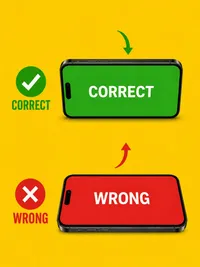
Tilt the phone down when you guess right and up to pass. You get 60 seconds to get through as many words as you can, then the phone goes to the next player.
Chardz is built around this version, with team tournaments, a leaderboard and 24 decks. You can also try it free in your browser.
The classic: two teams take turns, and the actor's team guesses.
Reverse charades
The whole team acts out the word together while one player guesses. Great for shy groups.
Speed charades
Each actor gets one minute to get through as many words as possible.
Kids charades
Use simple animals, foods and actions, and let little ones make sounds.
Video call charades
The actor gets a word privately (a generator on their phone works well) and acts it out on camera.
Tips to win
Actors: start with the category and word count, then act the easiest word first.
Actors: go big. Exaggerated movement reads better than subtle acting.
Guessers: shout everything. Wrong guesses help the actor steer you.
Everyone: agree on house rules (sounds, props, pointing) before the first round.
Charades rules: frequently asked questions
How many players do you need for charades?
+
Classic team charades works best with 4 or more players, split into two teams. The phone version works with as few as 2.
Can you talk in charades?
+
Not in classic charades. The actor must stay silent, without mouthing words. In the phone version, clue-givers can talk freely, as long as they don't say the word.
How long is each turn?
+
Usually 1 to 2 minutes. The phone version uses 60-second rounds where you guess as many words as you can.
How do you keep score in charades?
+
Give one point per correct guess and play an even number of rounds so each team acts the same number of times. Apps like Chardz keep score for you.
What's the difference between charades and the heads-up game?
+
In charades the actor knows the word and mimes it silently. In the heads-up version, the guesser holds the word on their forehead and everyone else gives clues out loud.
 Chardz
 Play charades with your phone